Clothing Rack Selection and Operation Guide
1. Core shelf types and functions
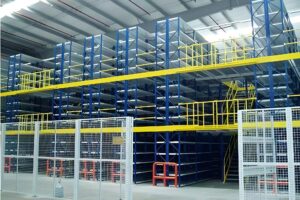
Heavy-duty storage racks
Three-column structure: Designed for bulk clothing storage, it can support up to 4,000 kg per layer. With column spacing of 1.5-2 meters, it is suitable for stacking full cases of goods and offers 50% greater stability than traditional racks.
Electrostatic spraying technology: The surface is treated with electrostatic powder spraying, which is wear-resistant and anti-static in accordance with the GB/T 12705-2006 anti-static standard, extending the shelf life.
Store display shelves
Prime Display Area: The 60-120cm height area is the core display zone, accounting for 55% of sales, and is used to display the season’s hottest and new products.
Multifunctional combination racks: Support mixed display of “side hanging + front hanging + stacking”. For example, a double-layer side hanging rack (1.5 meters long x 2.3 meters high) can accommodate 120 pieces of summer clothing. The height of the water table display cabinet is ≤ 90 cm, making it easy for customers to reach.
Customized design: Stainless steel material with embedded LED light strips, adapted to the visual needs of light luxury brand stores.
Folding turnover rack
U-shaped folding structure: The thickness is only 0.3 meters when empty, supports 4-layer stacking, and increases space utilization by 70%, making it suitable for the rapid turnover of seasonal clothing.
2. Warehouse Layout and Efficiency Optimization
Traffic Design Principles
One-way circular aisle: Main aisle width ≥ 1.5 meters, with shelf spacing of 1 meter, to avoid crossing picking paths and improve efficiency by 35%14;
ABC zoning management: Best-selling items (Class A) are placed within 10 meters of the sorting area, while slow-moving items (Class C) are stored in a remote clearance area, reducing ineffective handling by 30%.
Smart upgrade
AI visual inventory: Real-time monitoring of out-of-stock status through cameras, with an identification accuracy rate of 99.5%, reducing manual inspection costs by 40%;
WMS system integration: omni-channel inventory data synchronization, with a mis-shipment rate of less than 0.03%.
3. Display Rules and User Experience
Visual Merchandising Strategy
Vertical display: Clothes of the same color are vertically extended to 3-4 layers, increasing customer shopping efficiency by 18%;
Pile display: A 1.2×1.2 meter promotional pile is set up at the entrance of the main channel, combined with a radial layout of mine racks, which attracts attention and increases the duration of stay by 25%.
Environmental Adaptation
Anti-static requirements: The grounding resistance of shelves in the storage area must be ≤10⁶Ω, in compliance with IEC 61340-5-1:2016.
Lighting design: Illumination in the display area ≥1000 Lux, in the storage area ≥300 Lux, with a color temperature of 4000K to restore the original color of the clothing.
4. Recommendations for Model Selection in Typical Scenarios
Warehousing scenario: three-column heavy-duty shelves + AGV robot sorting;
Store scene: stainless steel combination rack + water table, suitable for light luxury brands;
Fast turnover scenario: U-shaped folding shelves + flexible channels (spacing can be compressed to 0.8 meters).