Panduan Pemilihan dan Pengendalian Rak Pakaian
1. Jenis dan fungsi rak teras
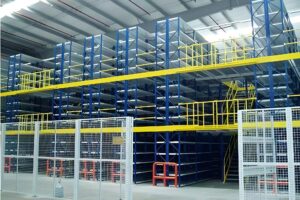
Rak penyimpanan tugas berat
Struktur tiga lajur: Direka untuk penyimpanan barangan pukal, ia boleh menyokong sehingga 4,000 kg setiap lapisan. Dengan jarak lajur 1.5–2 meter, ia sesuai untuk menimbun kotak penuh barangan dan menawarkan 50% kestabilan yang lebih tinggi berbanding rak tradisional.
Teknologi penyemburan elektrostatik: Permukaan dirawat dengan penyemburan serbuk elektrostatik yang tahan haus dan anti-statik mengikut piawaian anti-statik GB/T 12705-2006, memanjangkan jangka hayat.
Rak paparan kedai
Kawasan Paparan Utama: Kawasan ketinggian 60–120 cm adalah zon paparan teras, menyumbang 55% jualan, dan digunakan untuk mempamerkan produk terhangat dan baharu musim ini.
Rak gabungan pelbagai fungsi: Menyokong paparan campuran “gantung sisi + gantung hadapan + susun bertindan”. Sebagai contoh, rak gantung sisi dua lapisan (panjang 1.5 meter x tinggi 2.3 meter) boleh memuatkan 120 helai pakaian musim panas. Ketinggian kabinet paparan meja air adalah ≤ 90 cm, memudahkan pelanggan untuk mencapai.
Reka bentuk tersuai: bahan keluli tahan karat dengan jalur lampu LED tertanam, disesuaikan dengan keperluan visual kedai jenama mewah ringan.
Rak putar lipat
Struktur lipatan berbentuk U: ketebalannya hanya 0.3 meter apabila kosong, menyokong susunan bertindan 4 lapisan, dan meningkatkan penggunaan ruang sebanyak 70%, menjadikannya sesuai untuk pertukaran pantas pakaian bermusim.
2. Susun atur gudang dan pengoptimuman kecekapan
Prinsip Reka Bentuk Trafik
One-way circular aisle: Main aisle width ≥ 1.5 meters, with shelf spacing of 1 meter, to avoid crossing picking paths and improve efficiency by 35%14;
Pengurusan pemzonan ABC: Barangan laris (Kelas A) diletakkan dalam lingkungan 10 meter dari kawasan penyortiran, manakala barangan perlahan (Kelas C) disimpan di kawasan pelupusan terpencil, mengurangkan pengendalian tidak berkesan sebanyak 30%.
Kemas kini pintar
Inventori visual AI: Pemantauan masa nyata status kehabisan stok melalui kamera, dengan kadar ketepatan pengecaman 99.5%, mengurangkan kos pemeriksaan manual sebanyak 40%;
Integrasi sistem WMS: penyelarasan data inventori omni-saluran, dengan kadar penghantaran silap kurang daripada 0.03%.
3. Paparan Peraturan dan Pengalaman Pengguna
Strategi Peragaan Visual
Paparan menegak: Pakaian berwarna sama disusun menegak sehingga 3–4 lapisan, meningkatkan kecekapan membeli-belah pelanggan sebanyak 18%;
Paparan timbunan: Satu timbunan promosi bersaiz 1.2×1.2 meter dipasang di pintu masuk saluran utama, digabungkan dengan susunan radial rak lombong, yang menarik perhatian dan meningkatkan tempoh tinggal sebanyak 25%.
Penyesuaian Alam Sekitar
Keperluan anti-statik: Rintangan pendaratan rak di kawasan penyimpanan mestilah ≤10⁶Ω, selaras dengan IEC 61340-5-1:2016.
Reka bentuk pencahayaan: Pencahayaan di kawasan paparan ≥1000 Lux, di kawasan penyimpanan ≥300 Lux, dengan suhu warna 4000K untuk memulihkan warna asal pakaian.
4. Cadangan untuk Pemilihan Model dalam Senario Tipikal
Senario penyimpanan: rak tugas berat tiga lajur + penyusunan oleh robot AGV;
Susunan kedai: rak kombinasi keluli tahan karat + meja air, sesuai untuk jenama mewah ringan;
Senario perputaran pantas: rak lipat berbentuk U + saluran fleksibel (jarak boleh dikurangkan kepada 0.8 meter).